Tell Us You're Here

Capable. Ready To Work. Just Can't Drive.

There are two ways in. If you already ride with us, book straight away. If you have never signed up, start here — it takes a minute and costs nothing.

If vision loss means you can't drive, and you're doing everything you can anyway, whether that's working, looking for work, or just keeping your life moving, we want to know. We're documenting exactly how real and how present this need is across the greater Tulsa metro, the surrounding communities, and the rural areas beyond it, so we can build the resources to close the gap. It costs nothing to sign up, and every name here proves this is real.

Want to drive, or help some other way? We need you too.
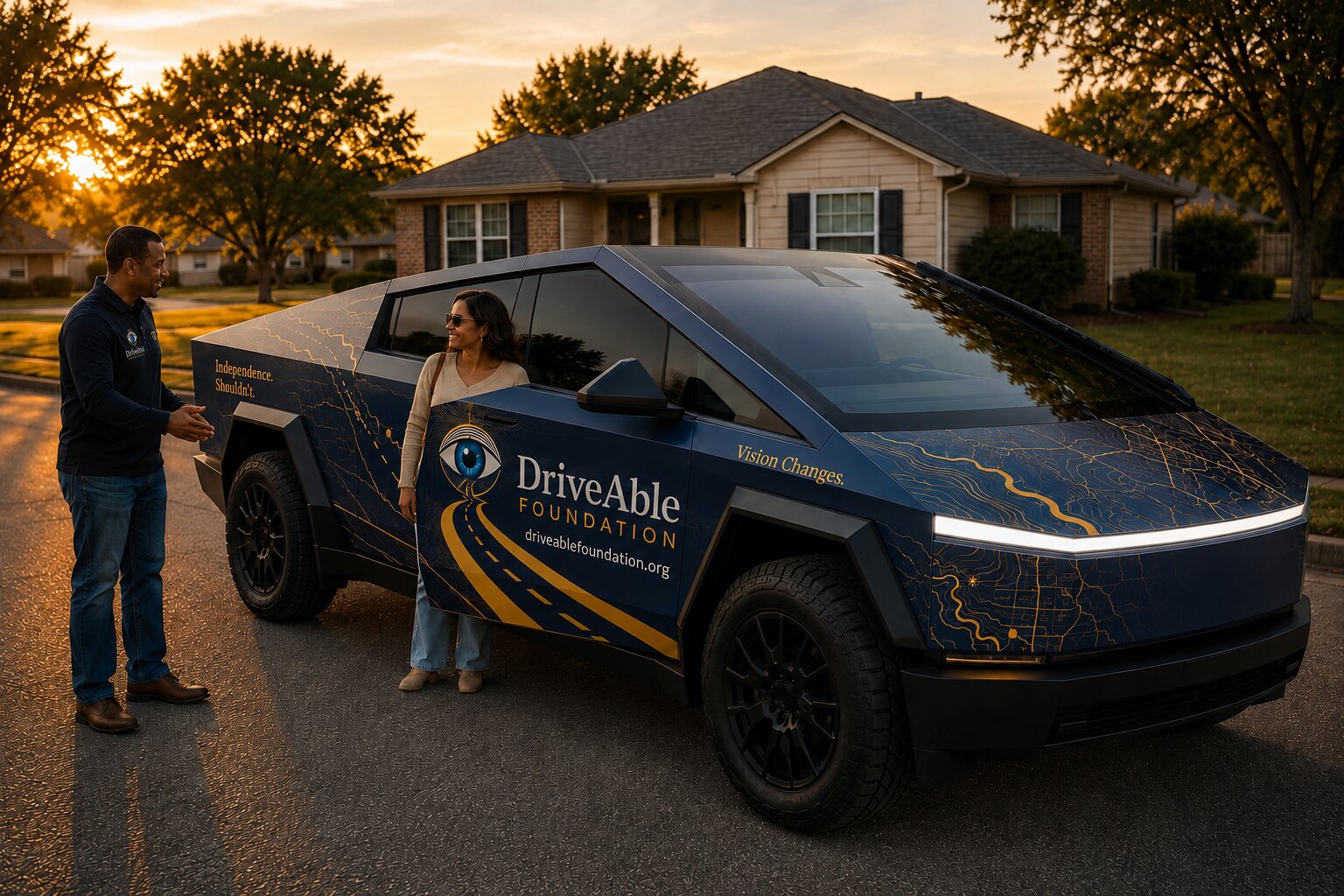
Concept rendering of a wrapped DriveAble Foundation Cybertruck greeting a rider outside her home at sunset

This is the ride we're building toward. Add your name below and help us prove the need, in Tulsa, the metro, and the rural areas beyond it.

Need A Ride?

Add your name to the list.

Any real reason a vision issue makes driving unsafe or uncomfortable counts. You don't need an official diagnosis or a specific number. If you're trying to get to work and don't have a reliable way there, this is for you.

This is how we find a ride near you. We match locally, but everyone is welcome to sign up no matter where you live.

We need this to set you up, and it is how we let you know when a ride is arranged.

Low vision is where we started and where we know the most, but we serve people who can't safely drive for other health reasons too. No diagnosis or paperwork needed. Your word is enough.

Your information stays private. We do not share it. We do not sell it. You can ask us to remove you anytime by emailing jerrod@driveablefoundation.org.

Where We Are Right Now

This starts as pure volunteer. No payment yet, and that's on purpose.

Family caregivers provide an estimated $600 billion a year in unpaid care nationally, most of it invisible. If you already drive your mom, your husband, your brother, your best friend - every appointment, every errand - we see that, and we want you counted. Right now we can't pay for it. What we can do is match willing volunteers with people who need a ride, prove this works, and build toward paying people back for it later.

This is step one of a longer plan. Step two is our own vehicle, a Cybertruck, so volunteers stop absorbing wear and cost on their own cars. Step three, further out, is what this is really building toward: priority access to autonomous vehicles for the people we serve, the same technology already carrying passengers today in a handful of cities, once it's ready to reach ours.

Volunteer
Where we are today - no payment, real matching, real rides
Cybertruck
Step two - a dedicated vehicle, so it's not your car anymore
Autonomous Fleet
The long-term goal - priority access once the technology reaches us
$600B
In unpaid family caregiving nationally every year
Beyond Rides

This registry is one piece of a bigger effort.

Alongside matching riders and volunteers, the Foundation works one-on-one with people in the low vision community - helping connect them to technology that could help, services they may not know exist, and financial assistance for things they need. Every dollar raised, whether it's for the Cybertruck or given directly, goes toward the same mission: running the Foundation itself and building toward all of this at once.

Why We're Also Raising For A Vehicle

Right now, volunteering means using your own car, at your own cost.

Real wear, real depreciation, real insurance exposure - every mile a volunteer drives today is a real personal cost, and we can't reimburse any of it yet. A dedicated Foundation vehicle is how that cost stops being anyone's to carry alone, and how we eventually raise enough to pay volunteers back for what they're giving for free right now. That's what the Cybertruck campaign actually is: not a separate goal, but the long-term fix for the exact cost you're absorbing today.